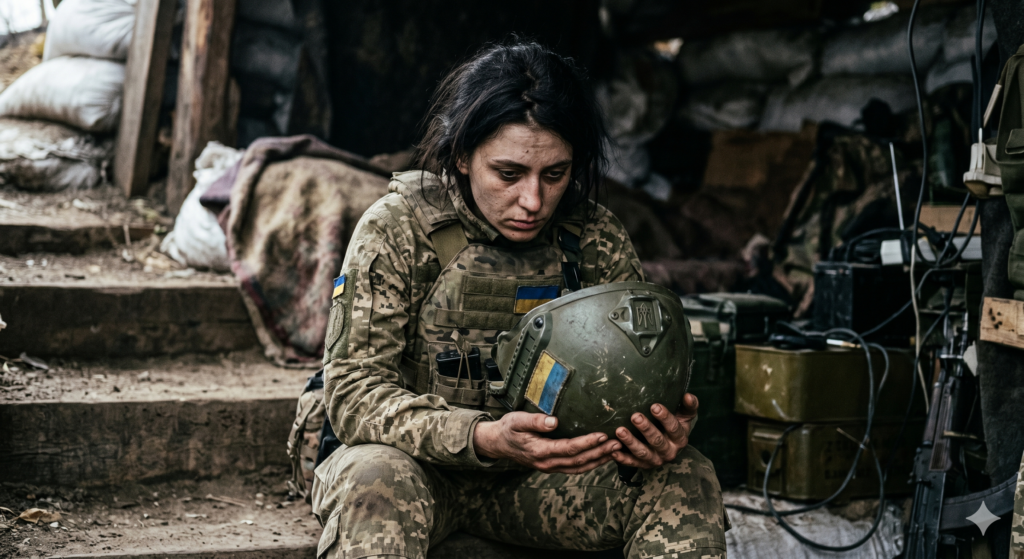
The war in Ukraine, whose intensity and brutality shocked the modern world, is not just a conflict over territory and sovereignty. Against the background of rumbling artillery and the buzz of attack drones, a quiet tragedy is unfolding whose consequences European society will bear for decades. While physical injuries are visible and often treatable, the modern conflict in Ukraine is shaping a new, extremely demanding phenomenon: complex post-traumatic stress disorder (C-PTSD).
The traditional concept of PTSD, as we know it from the conflicts in Afghanistan or Iraq, was often linked to a specific shocking experience – an IED explosion or an ambush. The Ukrainian battlefield of 2025, however, brings completely different dynamics. Studies published in professional journals such as Neuroscience Applied, speak of so-called continuous traumatic stress. Soldiers here are not exposed to isolated incidents, but to months of total destruction without the possibility of adequate rotation.
The main culprit of this psychological erosion is the unprecedented intensity of artillery fire. Constant exposure to explosions causes not only psychological shock but also small micro-injuries to the brain, which clinically overlap with mental disorders. Added to this is the modern element of “drone anxiety”. The constant presence of unmanned aircraft above soldiers’ heads means that there is no sense of safety either in the trench or in the rear while sleeping. This permanent hypervigilance keeps the nervous system in constant “fight-or-flight” mode, leading to total exhaustion of emotional reserves.
A key factor that distinguishes the situation in Ukraine from earlier NATO missions is the lack of rest. While Western armies made sure units were rotated regularly, Ukrainian defenders, due to personnel pressure, are often deployed on the front line for a year or longer. This is exactly where complex PTSD is born. It is no longer just about nightmares or startle reactions. C-PTSD affects the very core of the personality: the ability to regulate emotions breaks down, trust in humanity is deeply lost and there are feelings of total alienation from the civilian world.
It is important for the general public to understand that a veteran returning from this front is not just “tired”. His brain has been physically and chemically rewired to survive in conditions that are unbearable for the human psyche in the long term. According to data from 2025–2026, almost every second soldier in Ukraine shows symptoms of post-traumatic stress, with a fifth suffering from its complex form.
In conclusion, victory in a modern war is not measured only by holding the line on the map, but also by society’s ability to care for those whose inner world was torn apart by that line. C-PTSD in Ukrainian veterans is not a “weakness”, but a logical reaction to inhuman conditions. Our ability to understand these “invisible wounds” will be decisive for the stability and health of all of post-war Europe.