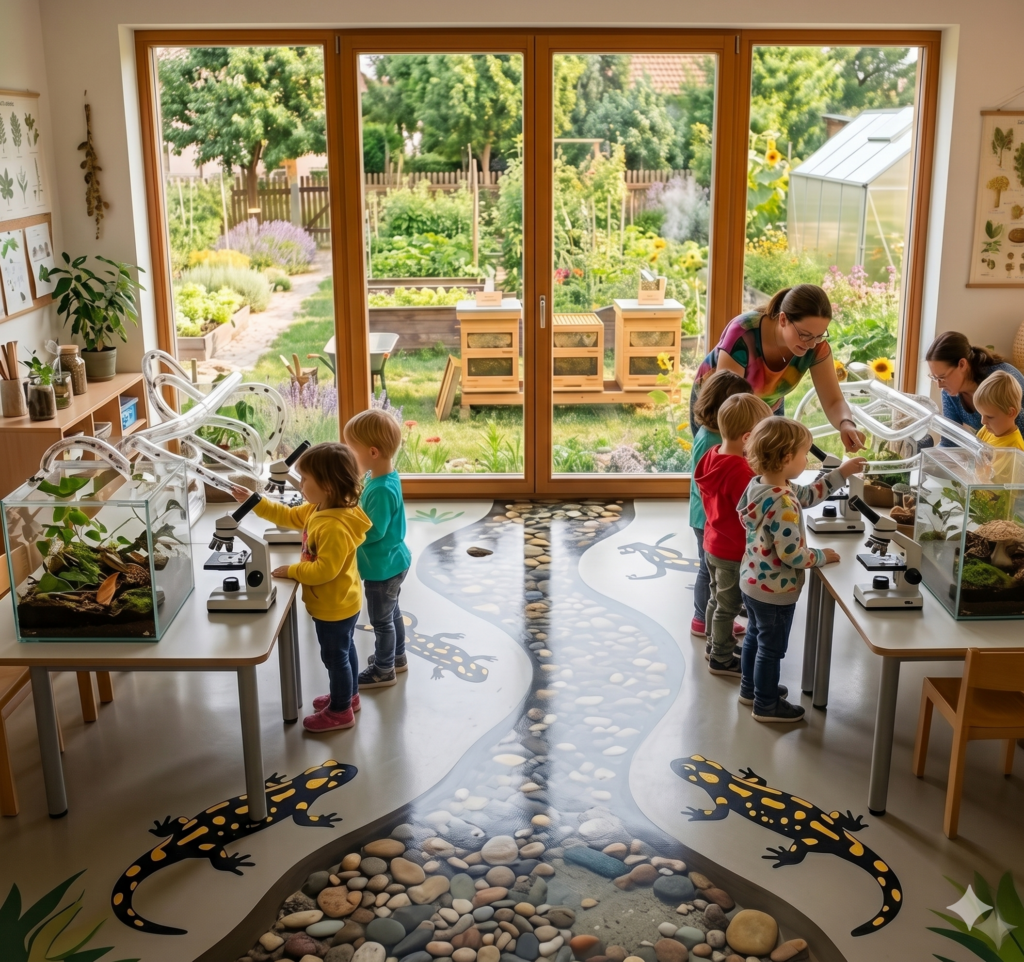
About the project
The fascinating world of bees offers children more than any textbook. It is a gateway to understanding the fragile balance of nature and our own responsibility for the world we live in.
The “Beehives for Children” initiative was created to open this path to every child – regardless of their parents’ finances and without unnecessary chemicals.
Because clubs and centres will receive the hives free of charge, this fundraiser removes financial barriers and opens the way to nature for every child. By supporting this initiative, you are not just investing in hives, but above all in the mindset of the next generation, for whom protecting nature will – thanks to these first small steps – become a matter of course rather than a topic of indifference.
How bees open up the world to children with autism
Article here…
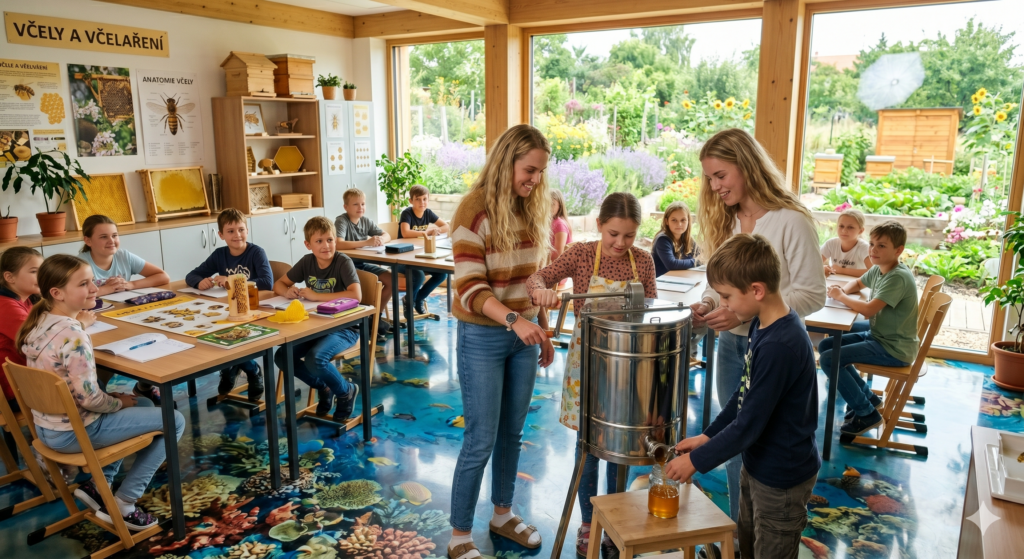
Education in the 21st century faces the challenge of connecting theoretical knowledge with practical skills and environmental responsibility. Traditional biology textbooks often cannot convey the depth and complexity of natural processes the way direct contact with a living organism can. Beekeeping as part of the school curriculum, known abroad as “bee pedagogy”, is proving to be one of the most effective tools for so-called project-based learning, which connects the natural sciences, mathematics, technology and the basics of entrepreneurship.
From biology to “living” mathematics and physics
While in an ordinary maths lesson statistics may be an abstract concept for pupils, in school beekeeping it becomes an essential tool. As programmes in the USA and the UK show, pupils working with hive scales and sensors analyse real data: daily nectar intake, the effect of temperature on colony activity or the correlation between rainfall and nectar flow.
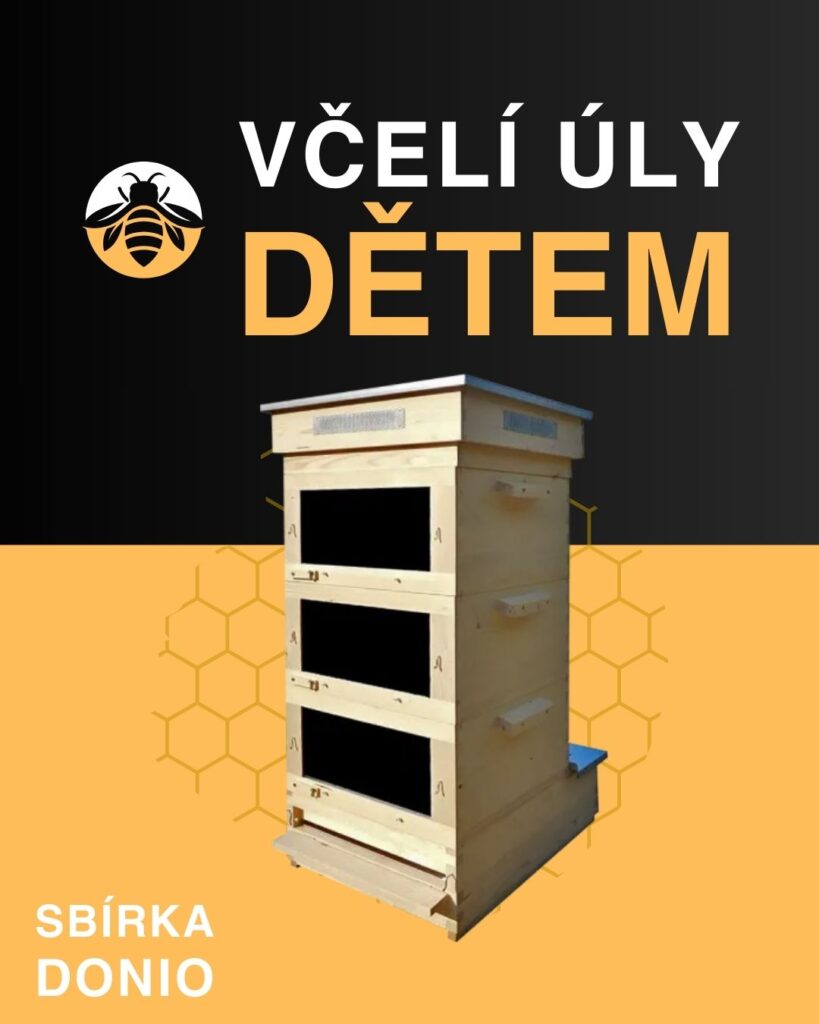
Physics and chemistry are applied when studying the composition of honey, beeswax and royal jelly, as well as hive thermoregulation. Modern technology plays a key role here, such as thethermosolar hive, which uses the laws of physics to eliminate the Varroa destructor mite without the need for harsh chemical medicines. Pupils thus see clean technologies applied in practice, in line with global sustainability trends.
“Pupils design labels, learn to build a brand for school honey and communicate with people.”
An incubator of entrepreneurship and financial literacy
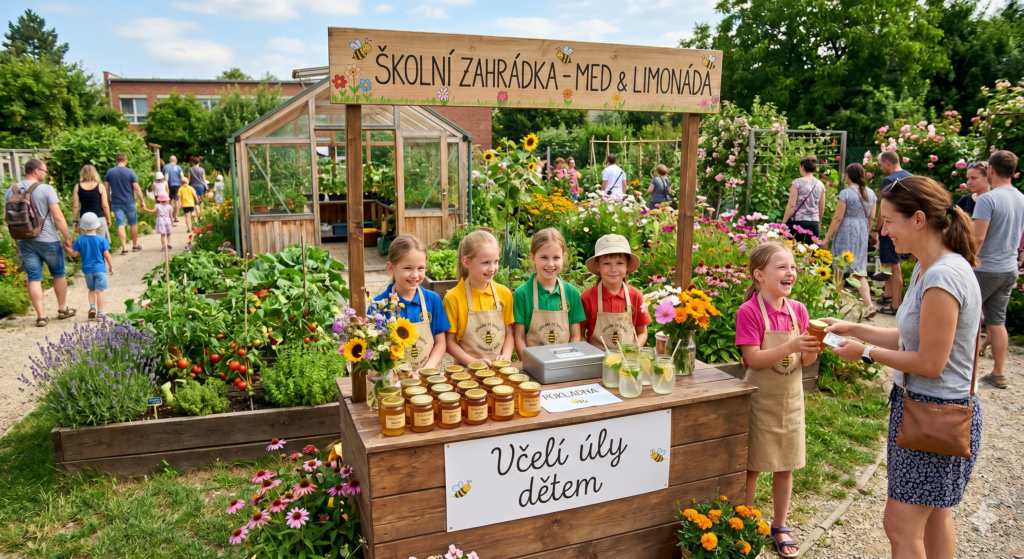
School beekeeping offers a unique space for developing entrepreneurial thinking. Bee products (honey, wax, propolis) are not just gifts of nature, but products that need a marketing strategy – what will it be? That is up to the children.
- Marketing: Pupils design labels, learn to build a brand for school honey and communicate with people when selling it at school events.
- Economics: Calculating the cost of equipment, depreciation of the hive and setting a sale price teaches children the basics of managing money and the value of work. Examples from Germany and the Netherlands confirm that school beekeeping mini-companies can generate funds that are then reinvested in school equipment, giving pupils a sense of direct responsibility and success.
Developing soft skills and ethics (as part of the wider community of beekeepers and gardeners)
Beyond measurable test results, beekeeping brings schools an invaluable development of empathy and discipline. Sir David Attenborough reminds us that we will only protect what we know and have a relationship with. Working with bees requires absolute concentration and calm – bees mirror the beekeeper’s emotions. This practical form of “mindfulness” helps children with attention disorders and teaches them respect for life in its most fragile form.
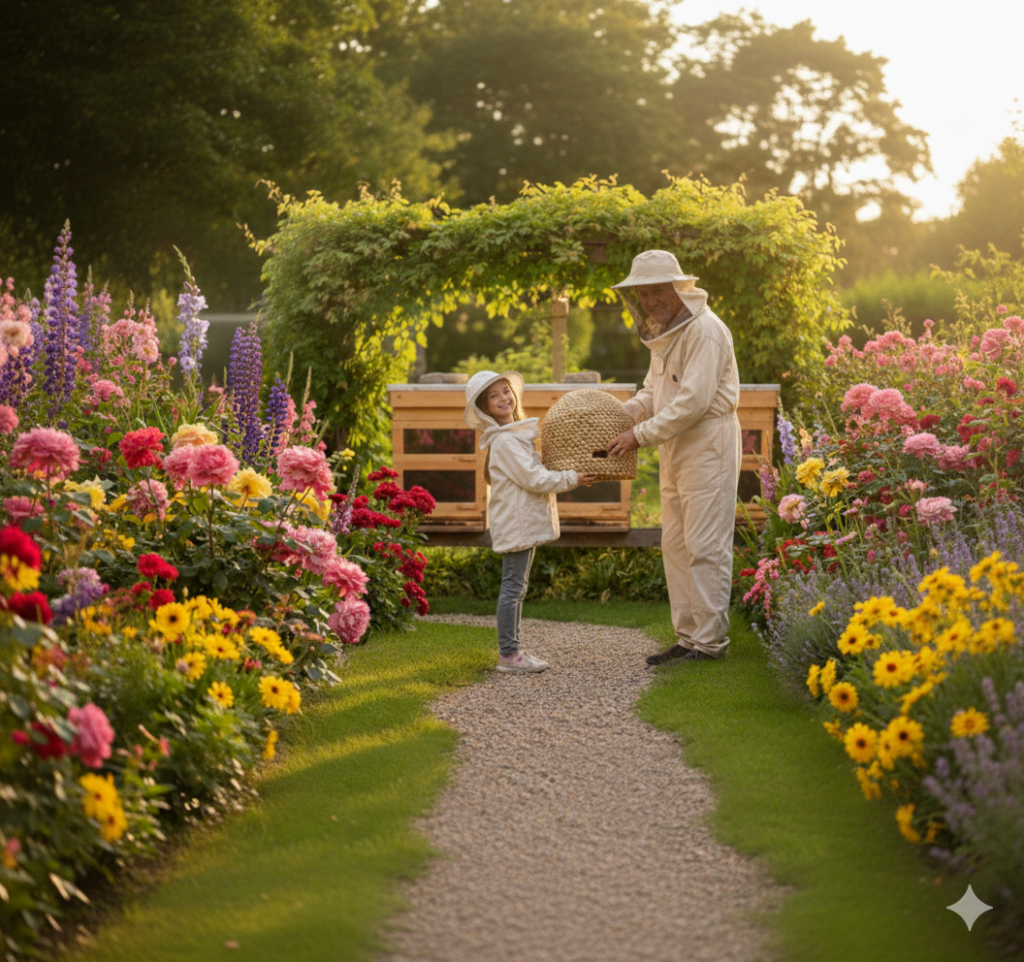
The passing of generations… handing down experience is part of the very essence of our lives, as families and as a society.
A school with its own hive stops being a building with desks and becomes a living ecosystem where pupils do not learn about the world, but for the world. As examples from around the world show, honey is just a sweet bonus in this process to a far more valuable harvest: a generation that understands nature and knows how to manage it responsibly.
Become active supporters and fans of the Beehives for Children initiative.
Our Facebook group is open to absolutely everyone – whether you are parents, grandparents, beekeepers, nature lovers, or you simply like our project.
We will be grateful for any form of support:
Share: Help us spread the word about this initiative or the fundraiser. Every shared post increases the chance that the right people will hear about the project.
Get actively involved: Perhaps your primary school or local leisure centre is exactly the right place where a thermosolar hive could help educate children.
Follow our story: Be there when we hand over more hives to our little beekeepers.
How does a thermosolar hive work? And why did we choose this type of hive for our project rather than conventional beehives?
For more information click here…
“How to connect theoretical knowledge with practical skills and environmental responsibility?“